
Childhood Bereavement Estimation Model (CBEM)
About Childhood Bereavement | CBEM Dashboard | Additional Resources

2026 CBEM Rural-Urban Reports Now Available
In partnership with the New York Life Foundation, Judi’s House / JAG Institute is proud to release the 2026 Childhood Bereavement Estimation Model® (CBEM) Rural-Urban Report, a national examination of how bereavement prevalence varies across rural, urban/suburban, and metro communities in the United States.
Updated annually using vital statistics from the Centers for Disease Control and Prevention (CDC), the CBEM provides a data-driven picture of childhood bereavement. CBEM results published in annual reports and on the CBEM Dashboard explore additional factors such as relationship to the deceased (parent of sibling) and cause of death. The 2026 CBEM Key Topic reports reflect 2020–2024 data, the five most recent years available, and underscore childhood bereavement as a growing national concern.
CBEM Key Topic Reports take a deeper look at factors that may influence childhood bereavement such as income, race, ethnicity, and geographic location. These reports provide focused analyses to help practitioners, policymakers, advocates, and community leaders better understand trends and respond to the needs of grieving children and families.
Who You Are and Where You Live Matters
The 2026 CBEM Rural-Urban Reports examine childhood bereavement across the following county categories: rural, urban/suburban, and metro for each U.S. state. These categories are based on the USDA Rural-Urban Continuum Codes (RUCC), which distinguish counties by metropolitan status, degree of urbanization, and proximity to metro areas. The findings reveal how geography and community context can influence both bereavement prevalence and access to support.
In Colorado, for example, 10.9% of children in rural counties will experience the death of a parent or sibling by age 18, compared to 8.6% of children in metro counties. Findings like these help communities better understand local needs and inform efforts to strengthen support systems for bereaved children and families.
The report also includes tailored recommendations for rural, urban/suburban, and metro communities. Whether you’re engaging community partners, seeking funding, or expanding services, local childhood bereavement data can help demonstrate need and advance support for children and families.
A detailed spreadsheet containing all counties and their categories can be found in the CBEM Toolkit by clicking here.
CBEM Dashboard
Discover the CBEM Dashboard, your centralized hub for dynamic bereavement data, customized visualizations, and integrated tools. Gain insights, support advocacy, and take action to better serve bereaved children and families.
Childhood Bereavement: A Critical Issue

An estimated 6.6 million children in the United States will experience the death of a parent or sibling by age 18.
Childhood grief has profound impacts on youth, families, and communities. Judi’s House/JAG Institute developed the CBEM to understand the magnitude of the issue. The CBEM estimates the percentage of U.S. children and youth who will experience the death of a parent or sibling by the time they reach adulthood.
2026 National Highlights
- 1 in 11 children in the U.S. will experience the death of a parent or sibling by age 18
- By age 18, 9.1% (~6.6 million) children will be bereaved
- By age 25, the number more than doubles to ~15.9 million youth
- Lowest state rate: Utah (6.8%)
- Highest state rate: New Mexico (14.7%)
How many children will be bereaved in YOUR state?
Hover over the map to view CBEM rankings and rates.
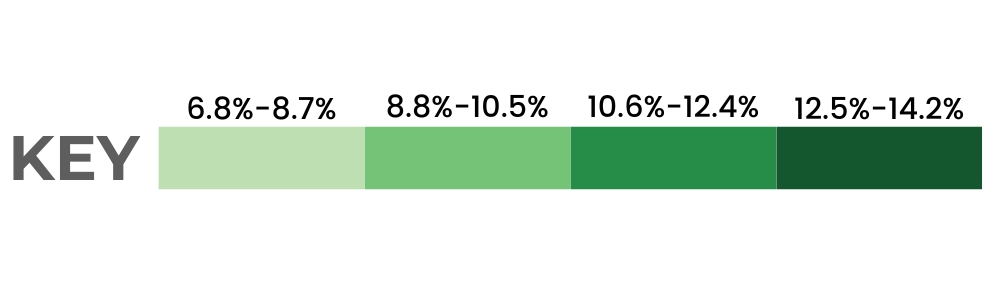
*Bereavement due to parent or sibling death by age 18.
Childhood Bereavement: The Cost of Inaction
Research shows that bereaved children are at an increased risk of disrupted development. Unaddressed childhood grief and trauma can lead to short- and long-term difficulties including decreased academic performance, mental health issues, and early mortality.
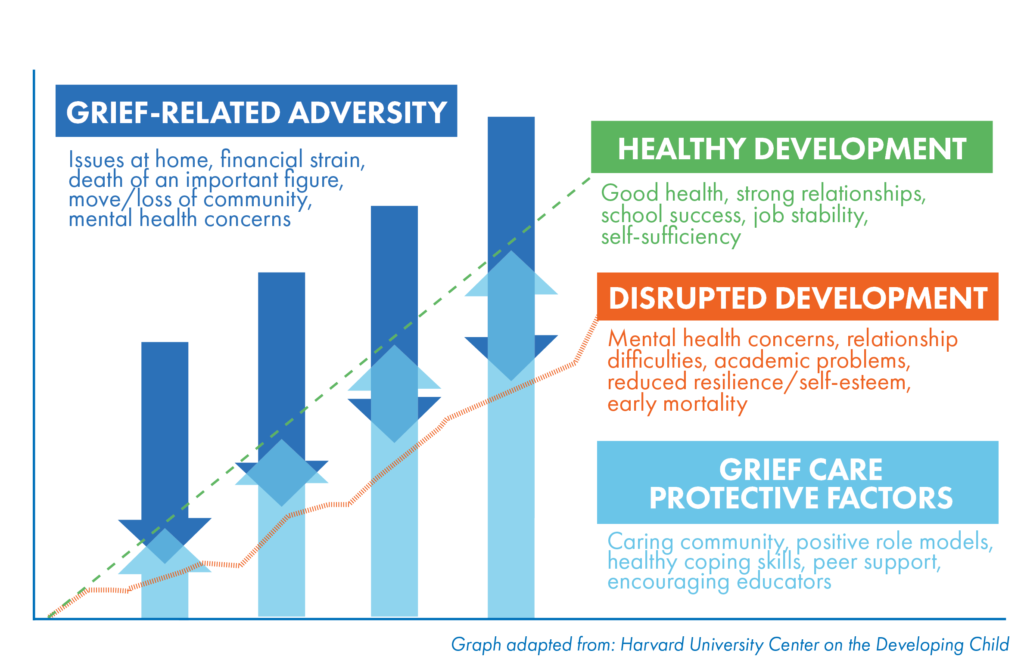
Timely support introduced at critical junctions aids in healthy development. Each day, bereaved youth turn to peers and adults for assistance in managing complex grief reactions. Data from the CBEM reinforces the need for access to grief-focused education and programming that helps communities respond compassionately and confidently.
Are you curious to know the prevalence of childhood bereavement in your community? Our CBEM team can help! We are thrilled to offer custom CBEM services to organizations and individuals across the country. Custom CBEM Reports, Community Demographic Reports, and consulting with the CBEM team can help you build a more precise understanding of the magnitude of childhood bereavement locally, underscoring the need for grief services in your area.
CBEM Key Topics
Cause of Death
Released in 2022, the Leading Causes of Death Report focuses on the five leading causes of death for youth and adults, respectively, and provides the percentage and number of children bereaved by each cause. Examining childhood bereavement through this lens offers opportunities for collaboration and advocacy among groups focused on these causes. The information encourages discussion and considerations about how to tailor care to the unique needs of each child and family.
County-Level
2025 County-Level CBEM data is now available!
The 2025 County-Level Key Topic Report represents an important advancement in our mission to understand and address childhood grief. This report estimates children bereaved due to parent and sibling death for each county in the U.S.
This year’s Key Topic Report features a special focus on Social Security survivor benefits, highlighting that an estimated $15.5 billion in support goes unclaimed each year by children and families who have lost a working parent, along with recommendations to improve access and awareness.
More discrete CBEM results empower childhood bereavement champions to advocate for tailored interventions and resources to build systems of care that are grounded in the realities of their specific populations.
Household Income
When it comes to childhood bereavement, income matters.
The 2024 Household Income Key Topic Report focuses on the intersection of childhood bereavement and household income. Providing state-by-state insight, these analyses reveal differences in bereavement rates based on county median incomes. In 44 out of 50 states, children living in the lowest income group counties are more likely to be bereaved than those living in the highest income group. In the six outlier states, low income is still associated with increased childhood bereavement.
Ready access to essential resources such as stable housing, safe communities, quality education, physical and mental healthcare, clean water, and healthy food play an important role in mitigating negative outcomes associated with childhood bereavement. Restricted income is associated with poor health outcomes and increased exposure to negative environmental conditions that reduce life expectancy.
Pandemic Impact
Released in 2022 and 2023, the National Pandemic Impact Report explores bereavement connected to parent’s death due to accidental drug overdose, COVID-19, suicide, and homicide by gunshot. The 2023 report includes additional point-in-time prevalence.
Children who have experienced a stigmatized death loss like those highlighted in these reports may experience feelings of isolation, guilt, and uncertainty. Findings in these reports reflect increases in childhood bereavement due to these stigmatized losses year over year.
Access the Reports | Watch the Videos | Access the Toolkit | Action Plan
Race & Ethnicity
The 2021 Key Topic Report addresses race and ethnicity at the state and national levels. The reports reveal sharp differences in bereavement prevalence and underscore the need for critical and timely grief supports for children. Additionally, each report highlights the leading causes of death in each population. Taken together, these data points illuminate geographic discrepancies, creating opportunities for focused campaigns and efforts to narrow the gaps.
These results complement CBEM Standard reports. Using data from CDC WONDER, results are presented for each racial (American Indian or Alaska Native, Asian or Pacific Islander, Black or African American, White) and ethnic (Hispanic or Latino) category.
Rural-Urban
The 2026 Key Topic Report examines bereavement prevalence across the rural-urban continuum at the county level. The report reveals meaningful differences among rural, urban/suburban, and metro communities, underscoring the need for critical and timely grief supports for children. These data illuminate geographic disparities in childhood bereavement, creating opportunities for targeted outreach, resource allocation, and community-based efforts to address gaps in support.
These results complement CBEM Standard Reports.
Additional Resources
Join us in elevating childhood bereavement to a critical public priority. You can keep kids on track to health and healing by utilizing our CBEM resources to educate your community and increase awareness.

Judi’s House/JAG Institute partnered with the New York Life Foundation to help support grieving children and families by creating the Childhood Bereavement Estimation Model.